
Two crystal awards can look nearly identical in a catalog photo and feel completely different in the hand. One is optical crystal. The other is regular crystal. The price difference between them can be two to three times, and the presentation impact can be even wider. Buyers who understand the distinction pick the right piece the first time. Buyers who do not sometimes pay premium prices for standard glass or, worse, cheap out on a headline award and hand the recipient something that looks green at the edges under stage lights. This guide breaks down the actual differences between optical crystal and regular crystal, walks through the factors that drive the decision, and helps you match the piece to the tier of recognition it is meant to represent. Both are legitimate options. The right choice depends on the moment, the budget, and the audience.
What Is Optical Crystal
Optical crystal is a high purity, lead free glass produced to optical grade clarity. The most common formulation is K9, sometimes labeled Type II, which delivers a transparent, colorless material with no visible inclusions, bubbles, or tint. The name comes from its original use in camera lenses and precision optics, where clarity is non negotiable. Awards made from optical crystal carry that same clarity forward. The material transmits light cleanly, refracts it into subtle rainbow flashes at the edges, and shows no color cast even in a thick tower or peak.
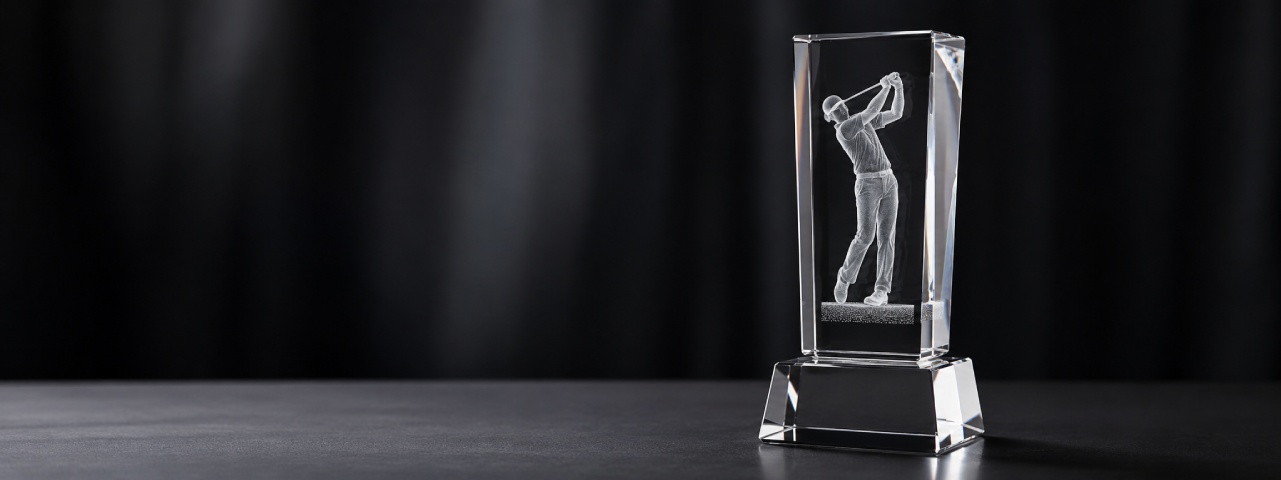
Optical crystal is heavier than regular crystal because the material is denser. A ten inch optical crystal tower can weigh five to seven pounds. That weight is part of the recognition. When a recipient picks up the piece, they can feel that it is not glass and not standard crystal. It has the heft of a premium object. The material also supports deep three dimensional subsurface engraving. A laser can etch an image or a logo inside the crystal without touching the surface, producing a ghostly floating engraving that catches light differently as the piece rotates. That effect is not possible in regular crystal, and it is one of the reasons optical crystal dominates the top tier of executive awards.
Common use cases include CEO recognition, chairperson awards, top salesperson of the year at the enterprise level, engineer of the year at technology companies, hall of fame inductions, and gala honors at bar association and industry association events. Any recognition where the piece needs to signal permanence and premium quality is a candidate for optical crystal.
What Is Regular Crystal
Regular crystal is a broad category that covers standard crystal awards produced from ordinary lead crystal or high quality glass. Some regular crystal contains a small percentage of lead, which historically gave crystal its sparkle and weight, though lead free formulations are now common. The clarity is good but not perfect. Looking at a regular crystal award from the side, especially at the thicker edges, you may see a slight green or gray tint. Small internal inclusions or bubbles can be visible under close inspection. None of this is a defect. It is the normal character of the material.
Regular crystal is still substantial in the hand. A ten inch regular crystal tower will weigh four to six pounds, only slightly less than an optical crystal equivalent. The piece feels like a proper award. Engraving is limited to surface techniques such as laser etching on the front face or sandblasting for a frosted effect. Subsurface three dimensional engraving is not possible because the material clarity does not support it cleanly. That is the practical trade off. You lose the interior 3D effect but keep most of the visual impact of the crystal category at a significantly lower price.
Common use cases include mid tier corporate recognition, service anniversary awards, quarterly sales recognition, department level employee awards, volunteer appreciation, community recognition, and any program where the visual impact of crystal matters but the budget cannot support optical grade material across the volume of pieces needed. Regular crystal covers a broad and legitimate slice of the recognition market. For most annual employee award programs, it is the correct choice.
Side by Side Comparison
Clarity is the sharpest difference. Optical crystal is water clear from every angle, at every thickness. Regular crystal shows a faint tint at the edges and may have small internal marks. In a display case with direct lighting, the difference is visible. In a hand held presentation, it is subtle but still noticeable to anyone comparing side by side.
Weight favors optical crystal by a small margin, though both feel substantial. The bigger sensory difference is in the way the material catches light. Optical crystal produces sharp edge refractions that look almost engineered. Regular crystal produces softer light play. On a lit stage, optical crystal looks alive. Regular crystal looks solid.
Engraving depth is the most functional difference. Optical crystal supports three dimensional subsurface engraving, where a laser etches an image inside the material without touching the surface. That is how a company logo appears to float in the middle of a crystal tower. Regular crystal supports only surface engraving. Both look good when done well. Only optical crystal supports the 3D interior effect.
Price is where the decision usually lands. Optical crystal awards typically run two to three times the price of a comparable regular crystal piece. A twelve inch optical crystal tower with a logo might run in the two hundred to three fifty range, while a comparable regular crystal tower might run in the eighty to one fifty range. Exact prices vary by shape, size, and engraving complexity, but the multiplier holds.
Use case guides the choice. Executive level recognition, headline honors, and once in a career awards justify optical crystal. Mid tier programs and higher volume runs justify regular crystal. Some organizations use both. The top three awards at a gala might be optical crystal, and the twenty runner up pieces might be regular crystal, with a consistent shape across the tier so the visual language stays coherent.
Lighting and display affect how the difference reads. In a well lit case or on a stage with directional lighting, optical crystal sings and regular crystal holds its own. In a dimly lit office, the difference narrows. Consider where the piece will live before deciding.
Hand feel is the final factor. Recipients will pick the piece up. Optical crystal reads as a premium object the instant it is in hand. Regular crystal reads as a solid award. Both are respectable. The premium hand feel comes at a premium price.
Spotting the difference in catalog photos takes practice. Look at the edges. Optical crystal is water clear at every edge. Regular crystal shows a faint tint. Look at the interior. Optical crystal is glass clear from every angle. Regular crystal may show subtle marks under strong light. If a catalog photo shows a floating interior logo or 3D image, it is optical crystal. If a catalog description says “K9” or “optical grade,” it is optical crystal.
When to Choose Optical Crystal
Choose optical crystal when the piece is the headline moment of a recognition program, when the recipient is at the executive level, when the award will live in a lit display case or be photographed heavily, or when the piece includes a 3D subsurface engraving that requires the clarity of optical grade material. CEO recognition, chairperson honors, hall of fame induction, top salesperson at the enterprise level, engineer of the year, gala keynote awards, and lifetime achievement pieces are all appropriate uses.
Confirm the piece will be presented in a setting that shows off the material. Optical crystal in a dark hallway is a waste of money. Optical crystal on a lit stage or in a display case is worth every dollar. Confirm the engraving plan. If the design calls for a 3D interior image or a floating logo, optical crystal is required. If the design is surface only, regular crystal delivers most of the same impact at a lower price. Confirm the shape. Towers, peaks, obelisks, flames, and diamonds all work well in optical crystal because the material clarity lets the shape read fully. Complex multi facet shapes especially reward optical grade material. When the recognition is once in a career or the audience is C suite, optical crystal is the correct answer.
When to Choose Regular Crystal
Choose regular crystal for mid tier recognition, higher volume programs, service anniversaries, department awards, quarterly sales pieces, and any recognition where the piece needs to look like a proper crystal award without carrying the price of executive tier material. Regular crystal covers a huge slice of the recognition market and delivers on the fundamental promise of a crystal award: a substantial, professional looking piece that signals real appreciation.
Confirm the setting. Regular crystal reads well in an office display, in a photograph taken with normal lighting, and in a presentation at a company all-hands or department meeting. It reads slightly less spectacular on a lit gala stage, though the difference is subtle to anyone not comparing side by side. Confirm the engraving plan. Surface laser engraving on the front face, sandblasted logos, and metallic fill colors all work well on regular crystal. If the design is elegant and clean, regular crystal delivers. Confirm the volume. If you are ordering twenty five service anniversary pieces, the savings on regular crystal versus optical crystal can be significant across the batch without a meaningful drop in perceived quality. When the recognition tier is broad and the budget matters, regular crystal is the right choice.
Common Mistakes
The most common mistake is over specifying. Buyers see the phrase “optical crystal” and default to it for every piece, even when the recognition tier and setting do not call for it. That drives cost up without adding real impact. Match the material to the tier. The second is under specifying. Buyers cut costs on a headline award and hand the CEO or top honoree a piece that looks green at the edges under stage lighting. Do not save the wrong money on the wrong piece. The third is trusting catalog photos alone. Photos can make regular crystal look like optical crystal. Ask the provider for a specification sheet that names the material. K9 or Type II means optical crystal. “Crystal” or “lead crystal” without a grade means regular crystal. The fourth is mismatched pieces within a tier. If you are ordering multiple awards for the same category, keep the material consistent across the batch.
How Viking Awards Can Help
Viking Awards has been engraving crystal recognition pieces since 1973, and the shop stocks both optical crystal and regular crystal across the shapes most recognition programs use. In-house laser engraving handles surface work on regular crystal and three dimensional subsurface engraving on optical crystal, which means one provider covers the full crystal tier without outsourcing.
For premium recognition, the Viking optical crystal awards catalog (https://viking-awards.com/product-category/awards/optical-crystal-awards/) covers towers, peaks, flames, and diamond shapes suitable for executive honors, hall of fame pieces, and gala headline awards. For mid tier and volume recognition, the broader crystal awards catalog (https://viking-awards.com/product-category/awards/crystal-awards/) includes the regular crystal towers, columns, and shaped pieces that annual programs rely on. The clear crystal collection (https://viking-awards.com/product-category/awards/clear-crystal/) and the rectangle crystal line (https://viking-awards.com/product-category/awards/rectangle-crystal/) offer clean geometric options that suit both tiers depending on the material selection. Viking will consult on which grade fits the tier of the recognition, walk through engraving options including 3D subsurface work, and produce proofs before any laser touches the material.
>>> Get Started with Viking Awards
>>> Call (630) 833-1733 or visit viking-awards.com to request a quote, discuss custom designs, or place a rush order.
>>> Disclaimer: The comparisons and opinions in this article reflect editorial opinion only. Individual product suitability depends on your specific use case, budget, and preferences. Readers are encouraged to do their own due diligence and consult with providers before making a purchase decision. No products or manufacturers referenced are intended to be disparaged.
Conclusion
Optical crystal and regular crystal both belong in the recognition toolkit. The decision comes down to the tier of the award, the setting where it will be presented, the engraving plan, and the budget across the batch. Optical crystal wins for executive recognition, headline honors, once in a career awards, and any piece with a 3D subsurface engraving. Regular crystal wins for mid tier programs, service anniversaries, department awards, and higher volume runs where the material still needs to signal crystal quality. Neither option is a wrong answer when matched to the right recognition. What matters is intentional selection based on the tier, the moment, and the audience. Viking Awards will help work through the choice and produce the piece to spec. Call (630) 833-1733 or visit viking-awards.com to talk through your program.