
A perpetual award is a promise. It says the recognition will continue year after year, and it says the winner’s name will sit alongside the names that came before and the names that will come next. The decision between a perpetual trophy and a perpetual plaque shapes everything that follows: where the piece lives, how it gets presented, how much it costs, and how long it will keep working before the plate space runs out. Sports leagues, sales organizations, schools, and halls of fame all use one format or the other, and the choice usually comes down to display space and the moment of presentation. This guide breaks down both options in plain terms, walks through the side by side factors, and helps you land on the right format the first time. Neither option is universally better. They are built for different rooms and different ceremonies.
What Is a Perpetual Trophy
A perpetual trophy is a large freestanding or tabletop piece that moves from winner to winner year after year, with a new plate engraved and attached each year to record the latest name. The classic reference is the Stanley Cup: a cup sitting on a base ringed with plates, each plate listing a team or a name. Corporate sales organizations use the same idea for annual top rep awards. A single cup or column sits in a display case at headquarters most of the year, then travels to the sales kickoff or the annual banquet where it is presented to the year’s winner. Some programs let the winner keep the trophy for the year and return it before the next ceremony. Others keep it in a permanent case with a smaller replica going home with the winner.
The build is usually a metal or crystal cup on a wooden or marble base, with brass or aluminum plates around the base for the rolling list of names. Plate space is finite. A well designed perpetual trophy plans for twenty to fifty years of engraving before the base needs to be enlarged or a second tier added. Sports leagues, sales floors, poker tournaments, golf clubs, and youth athletic programs are the most common users because the format has a real presentation moment. The trophy gets lifted, held overhead, and photographed. That moment does not translate to a plaque on a wall. When the ceremony is the point, the trophy is the format.
What Is a Perpetual Plaque
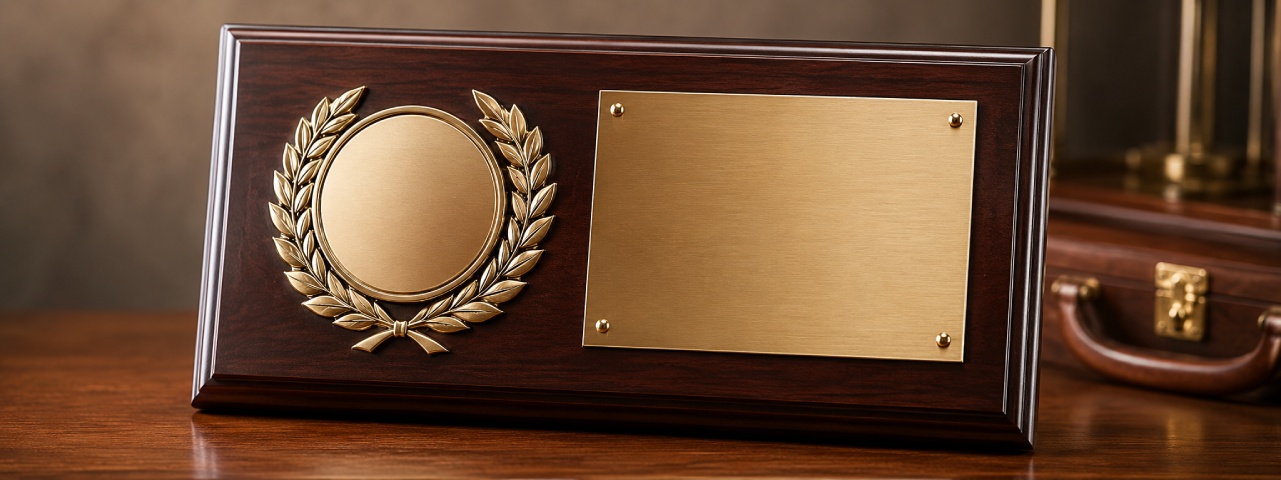
A perpetual plaque is a wall mounted board with a header plate that names the award and small individual plates that get added each year to record the winner. The plaque hangs in a lobby, a conference room, an office, a school hallway, or a hall of fame corridor. Each year the honoree’s plate gets engraved and mounted in the next open slot on the board. The visual effect grows over time. A perpetual plaque with thirty years of names on it becomes a piece of institutional history that anyone walking by can read.
The build is typically a wood board, usually walnut or cherry, with a decorative brass or aluminum header plate and a grid of small individual plates below. Sizes range from small twelve slot plaques for a decade of recognition to large multi row boards that can hold fifty or more names. Offices use perpetual plaques for annual employee awards, service milestones, and safety records. Schools use them for scholar of the year, athlete of the year, and departmental awards. Halls of fame use them as the permanent record for inducted members. Bar associations and civic clubs use them for annual chairperson or president recognition.
The presentation moment is different. The winner receives a smaller keepsake award at the ceremony, and their plate is added to the wall plaque shortly afterward. The unveiling of the new name on the wall becomes a quiet second recognition moment, often photographed for the internal newsletter or the school website.
Side by Side Comparison
Display space is the first factor. A perpetual trophy needs a display case, a tall pedestal, or a prominent shelf. That footprint has to exist before the trophy is ordered, and it has to be visible to the audience the recognition is meant to reach. If the case is buried in a back hallway, the trophy loses its purpose. A perpetual plaque needs wall space, which is usually easier to find. Lobbies, conference rooms, and hallways all have wall real estate that will support a twelve by eighteen inch plaque without any special mounting hardware.
Presentation weight is the second factor. A trophy has a physical presentation moment. Someone walks up on stage, receives the piece in hand, and holds it up. That produces the photograph that ends up on the company intranet or the league website. A plaque cannot be presented that way. A separate keepsake award has to be handed out at the ceremony, and the plaque is updated later. If the annual ceremony is a major event that everyone attends, a trophy delivers more energy at the moment of recognition.
Cost is the third factor. A quality perpetual trophy runs higher upfront because the cup, base, and case represent significant material and construction cost. Ongoing costs are limited to the engraved plates each year. A perpetual plaque is cheaper upfront because it is essentially a decorated wood board with plates. Ongoing costs are similar, one engraved plate per year. Over a twenty year run, the cost difference narrows. The upfront gap is what matters for the budget decision.
Engraving quality and consistency matter over time. Both formats face the same challenge: the plates added in year fifteen need to match the plates added in year one. That means using the same provider, the same plate stock, and the same font. Providers that keep the original specs on file can match plates cleanly. Providers that lose or discard the specs will produce visible mismatches that hurt the piece.
Durability and longevity favor the plaque slightly. A wall plaque is not handled, not moved, and not exposed to the wear that comes with a trophy that gets passed around every year. Trophies get dented, scratched, and occasionally damaged in transit. Cases mitigate this but do not eliminate it. Plate replacement is straightforward for both, and both can be expanded when plate space runs low, though the expansion process is cleaner for plaques.
Use case is the final differentiator. Trophies are the right format when the ceremony is the point and the piece needs to travel. Plaques are the right format when the recognition is permanent and the piece needs to live in the room. Some programs do both: a perpetual trophy that is handed over each year and a companion perpetual plaque on the wall that records every winner in the program’s history.
When to Choose a Perpetual Trophy
Choose a perpetual trophy when the annual presentation is the center of gravity for the recognition program. Sports leagues, sales organizations with a big annual kickoff, competitive events with a real ceremony, and cultural programs that want a piece to travel are all good fits. The trophy format works when the audience gathers in one room, when someone gets to hold the piece up, and when the moment matters more than the permanent display.
Confirm a few things before ordering. Confirm there is a display case, a pedestal, or a shelf where the trophy will live between ceremonies. Confirm the plate layout supports at least twenty years of names without redesign. Confirm the base is heavy enough to prevent tipping. Confirm the piece is insurable if it will leave the building each year. And confirm the provider that engraves the original plates will still be around, or that the plate specs are saved somewhere the next provider can match. Trophies that get passed to a second engraver at year eight almost always end up with a visible plate mismatch. If you are running a sports league, a sales program, or a competitive event where the winner takes the piece home for the year, the trophy is almost always the right call. The photograph of the winner holding the trophy overhead is the payoff.
When to Choose a Perpetual Plaque
Choose a perpetual plaque when the recognition lives in the room and the goal is a growing permanent record. Offices, schools, halls of fame, bar associations, civic clubs, and any organization where the audience walks past the display regularly are all good fits. The plaque format works when the recognition is meant to be seen every day, not just at the annual ceremony.
Confirm the wall space before ordering. Measure the width and height carefully, and account for future plate additions. A perpetual plaque that fills up in eight years has to be replaced or extended, and that transition is disruptive. Order a plaque size that will run at least twenty years without expansion, and confirm the layout accommodates it. Confirm the mounting hardware and the wall type. Drywall, brick, and paneling all take different anchors, and a heavy walnut plaque needs solid mounting. Confirm the header plate wording is exactly right, since the header is engraved once and lives with the plaque forever. Confirm the plate stock will be available for the long haul. Small individual plates come in standard sizes, but a provider that stocks a specific plate style should be able to reproduce it for two decades. Offices running employee awards, schools running scholar recognition, and any organization that wants a permanent visual record should default to the plaque.
Common Mistakes
The most common mistake is ordering a perpetual piece without confirming the display location. A trophy without a case ends up in a supply closet. A plaque without a wall ends up leaning against a filing cabinet. The location has to exist before the piece is ordered. The second mistake is undersizing the plate layout. Programs that plan for ten years end up scrambling in year nine. Plan for at least twenty years of plates before the piece needs expansion. The third mistake is switching engravers midstream. Match the plates by staying with the original provider or by handing the new provider the original specs. The fourth mistake is over engraving the header. A busy header plate ages badly. Keep it clean and let the winners’ plates do the visual work.
How Viking Awards Can Help
Viking Awards has been building perpetual trophies and perpetual plaques out of its Westchester, Illinois shop since 1973, and the operation is designed for exactly this kind of long term recognition work. In-house laser and rotary engraving mean the plate quality on year one matches the plate quality on year fifteen. Original specs stay on file, so a plaque or trophy ordered from Viking today can be updated with matching plates for decades.
For perpetual plaques, the Viking plaques catalog (https://viking-awards.com/product-category/plaques/) covers walnut, cherry, and piano finish options that suit corporate lobbies, school hallways, and hall of fame displays. The perpetual plaque line (https://viking-awards.com/product-category/plaques/perpetual-plaque/) is the direct fit, with header and individual plate configurations that plan for long recognition programs. Walnut plaques (https://viking-awards.com/product-category/plaques/walnut-plaque/) are the standard for traditional offices and civic organizations. For perpetual trophy programs, the trophies catalog (https://viking-awards.com/product-category/trophies/) covers cups and bases in a range of sizes, and the trophy cups collection (https://viking-awards.com/product-category/trophies/trophy-cups/) is the go-to for sports leagues, sales programs, and competitive events. Viking will consult on plate layout, header wording, display case sizing, and long term plate matching before any material is cut.
>>> Get Started with Viking Awards
>>> Call (630) 833-1733 or visit viking-awards.com to request a quote, discuss custom designs, or place a rush order.
>>> Disclaimer: The comparisons and opinions in this article reflect editorial opinion only. Individual product suitability depends on your specific use case, budget, and preferences. Readers are encouraged to do their own due diligence and consult with providers before making a purchase decision. No products or manufacturers referenced are intended to be disparaged.
Conclusion
The choice between a perpetual trophy and a perpetual plaque comes down to the room and the ceremony. Trophies deliver a presentation moment, travel with the winner, and live in a display case. Plaques deliver a permanent visual record, hang on a wall, and grow over decades. Neither option is universally correct. Sports leagues and sales programs almost always want the trophy. Offices, schools, and halls of fame almost always want the plaque. Some programs run both, and that combination often produces the strongest recognition impact. Whatever you choose, plan the display location before the order, plan the plate layout for at least twenty years, and stay with a single provider for the life of the program. Viking Awards will help work through the details. Call (630) 833-1733 or visit viking-awards.com to talk through the specifics of your program.