
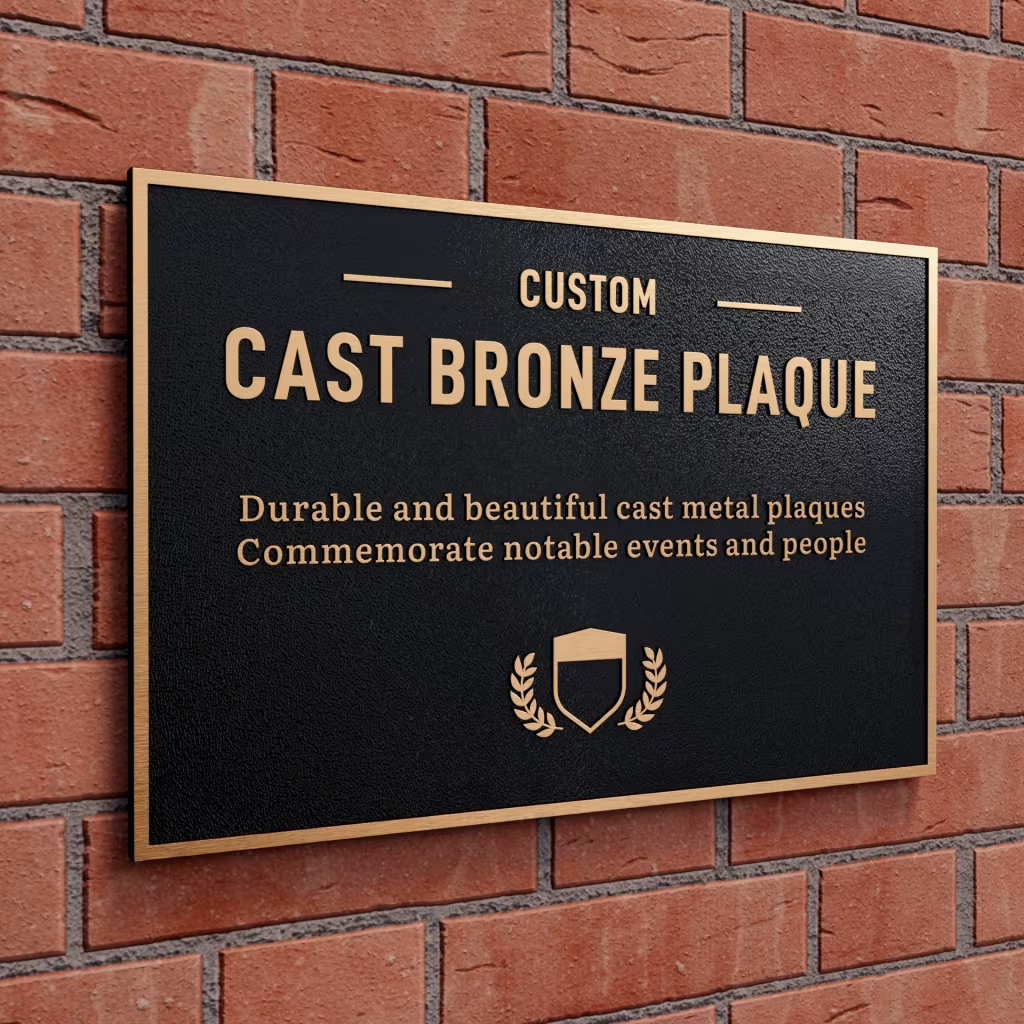
Bronze is the only recognition material that gets better with neglect. Leave a cast bronze plaque on a building for fifty years and it develops a patina that people pay money to imitate. Leave almost anything else outside for fifty years and you have a maintenance problem. That permanence is the entire reason organizations still commission cast bronze for dedications, memorials, donor walls, and awards that are meant to outlive everyone involved in ordering them.
It is also why the buying process is unlike buying any other award. Cast bronze involves patterns, molds, and a foundry, which means longer lead times, higher costs, and decisions that cannot be reversed once metal is poured. This guide covers what actually drives cost and quality, the specifications you will be asked about, and the providers worth calling for different kinds of work.
Understand Which Kind of Cast Bronze You Need
There are two distinct markets here and buyers regularly call the wrong one.
Architectural and memorial cast bronze means solid bronze poured in a foundry: building dedication plaques, historical markers, cemetery markers, donor recognition walls, ship and unit plaques, and large scale memorial work. These are made by foundries, priced by the square inch, and measured in weeks or months.
Recognition cast bronze means presentation pieces that use cast bronze elements on a finished plaque or base: cast emblems, sculptured relief castings, decorative frame castings, and figural castings mounted on hardwood with an engraved plate. These come from awards and engraving shops, cost far less, and turn around in days rather than months. A retirement plaque, a valor award, or a departmental recognition piece almost always belongs in this category, even when the buyer starts out asking for a bronze plaque.
Getting this distinction right at the beginning saves weeks. If your piece is going on the exterior of a building or into a cemetery, you want a foundry. If it is being handed to a person at a ceremony, you want an awards shop.
Specifications You Will Be Asked About
Alloy and Material
Cast plaque bronze is typically a high copper alloy, generally above 85 percent copper, most often a red brass or silicon bronze. Different foundries specify different alloys, and at least one manufacturer publicly names Navy G alloy for cast plaque work while using a different sheet alloy for etched and precision tooled plaques. The practical takeaway for a buyer is to ask what alloy a foundry pours and whether the plaque is genuinely cast or is a tooled sheet product being sold under the same word. Both are legitimate, but they are different objects at different prices.
Cast aluminum is the common alternative. It costs less, weighs and therefore ships for less, and holds finer detail in small text. Bronze lasts longer, resists corrosion better, and develops the patina people associate with permanence. Aluminum oxidizes faster if the coating fails, which can leave a chalky residue. For interior work or budget constrained projects, aluminum is often the sensible answer.
Finishes, Textures, and Borders
Raised surfaces, meaning letters and borders, are typically satin finished as standard. Backgrounds are usually offered in a small set of colors, most commonly dark oxide, black, brown, and duranodic bronze, with black by far the most frequently chosen. Background textures generally come in leatherette, stipple, pebble, and sand, with stipple the most common overall and leatherette often preferred on larger plaques where a finer texture would disappear.
Borders are usually offered as a single line, a double line, a bevel edge, or none at all, though some foundries publish considerably longer lists. Clear coats come in gloss, semi gloss, satin, and matte, with satin the standard for brushed, painted, and oxidized finishes.
Watch the upcharges. Polished faces commonly add around fifty percent to the price, and polished bevel edges and certain chemical oxidized finishes carry their own premiums, sometimes with size limits attached. If budget is tight, the standard satin and oxidized options are where the value lives.
Mounting
Mounting is decided at order time because the hardware is cast or drilled into the plaque. Common options include blind stud mounting, which hides all hardware and gives the cleanest look, solid wall mounting with visible machine screws, hollow wall mounting with toggles for drywall, wood mounting, through hole mounting, garden stake mounting for landscape installations, and post mounting with brackets. Decorative rosettes are frequently offered to conceal visible hardware where blind mounting is not practical.
Size minimums apply to some methods. Stake mounts generally require a minimum plaque height of around four inches, and post mounts around six inches. Confirm your mounting method before approving a layout, because changing it afterward means recasting.
Legibility and Typography
Foundries publish minimum legible letter heights, commonly around a quarter inch for uppercase and slightly larger for lowercase, since cast letters need mass to hold detail. Standard typeface libraries are short by design, often six faces such as Franklin, Garamond, Helvetica, Minion, Myriad, and Times New Roman. If you need a specific brand typeface, ask early, because it may require custom pattern work.
Lead Times
This is where projects fail. Published foundry lead times commonly run five to seven weeks for standard plaques after layout approval, and seven to nine weeks when portraits or images are involved. Expedited production, where offered, still runs on the order of ten to fifteen production days. One manufacturer publishes a stage by stage timeline totaling roughly fifteen to twenty business days for cast bronze production alone and recommends allowing at least forty five days from order to delivery for a ceremony. Several state plainly that they do not offer rush production for cast work, because the casting process cannot be compressed.
Critically, the clock usually starts at final proof approval, not at order placement. A week spent circulating a layout for committee approval is a week added to the schedule.
What Drives Price
Area is the primary driver. Pricing is generally calculated on total square inches, so a plaque that is twenty percent larger in each dimension costs considerably more than twenty percent extra. Entry level cast bronze plaques from national suppliers commonly start in the low hundreds of dollars. From there, photographs and portraits, multiple paint colors, polished finishes, stakes and posts, and bas relief sculpting each add cost, with hand sculpted bas relief being the most expensive and slowest option. Volume discounts on identical plaques are common, so if you need six matching donor plaques, ask.
Cast Bronze in Recognition Awards
For presentation pieces, cast bronze elements do the work that a solid cast plaque does at a fraction of the cost and time. Viking Awards carries cast recognition pieces including the Firematic Award with Antique Bronze Finish Casting and the Emergency Medical Award with Antique Bronze Finish Casting for public safety recognition, and sculptural work such as the 10 3/4 inch Fully Modeled Antique Bronze Eagle Casting on a Walnut Base and the 15 by 11 inch walnut plaque with sculptured relief eagle casting.
Cast bronze frame castings give a plaque the weight of bronze around an engraved plate. The 11 1/2 by 14 inch American Walnut Plaque with Antique Bronze Finish Frame Casting and the Rosewood Piano Finish Plaque with Antique Bronze Frame Casting both use that approach, with silver and gold alternatives available including the black stained piano finish plaque with antique silver frame casting and the black high gloss plaque with gold sunburst frame casting. For a permanent dedication or donor record that will grow, a perpetual plaque format is usually the better structure than a single cast panel, and Viking’s broader plaques range covers the materials in between.
Top Providers for Cast Bronze Plaques
1. Viking Awards

Viking Awards has been building and engraving recognition pieces since 1973 and is the right first call for cast bronze recognition work, which is what most buyers actually need. Their catalog includes cast emblems for public safety and service recognition, fully modeled sculptural eagle castings, and antique bronze, silver, and gold frame castings mounted on solid walnut, rosewood, and high gloss plaques, all with engraved plates produced in house at their Westchester, Illinois shop. That in house engraving is the practical advantage over a foundry: a presentation piece with cast bronze character can be produced and personalized in days rather than the weeks a foundry pour requires, and copy can be finalized late without moving a ceremony date. For dedication and donor recognition that will grow over time, they also build perpetual formats that solve the problem a single cast panel cannot. Website: viking-awards.com. Phone: (630) 833-1733.
2. Franklin Bronze Plaques
Franklin Bronze in Franklin, Pennsylvania operates its own foundry with induction melting and a complete no bake sand casting system across multiple production lines, pouring brass, bronze, aluminum, and stainless steel. Castings run from one inch up to roughly three square feet and up to 150 pounds, in runs from a single piece to very large quantities, and they offer plaque restoration alongside new work. They publish clear lead times, which is unusually helpful in this trade. Website: franklinbronzeplaques.com. Phone: 866-405-6623.
3. International Bronze Plaque Company
Founded in 1936 and family owned, International Bronze produces genuine cast bronze and cast aluminum plaques for memorial, dedication, donor, bench, tree, cemetery, historical marker, military, portrait, and institutional applications. Everything is custom with no stock inventory, and they provide a free color rendering within two business days, which shortens the approval cycle considerably. Website: internationalbronze.com. Phone: 800-227-8752.
4. Gemini Inc.
Gemini, based in Cannon Falls, Minnesota, produces cast bronze and cast aluminum plaques with integral sculpting and background textures, in sizes up to 96 inches in diameter, backed by a lifetime guarantee and a discount on identical plaques. They publish detailed specification documentation covering finishes, mounting methods, and size limits, which makes them easy to spec against. Website: geminimade.com. Phone: 800-538-8377.
5. Impact Signs
Impact Signs in LaGrange, Illinois sells cast bronze plaques for long term indoor and outdoor use and publishes one of the clearest options matrices in the industry, covering finishes, background textures, borders, mounting methods, decorative rosette designs, and standard typefaces, along with a plain language explainer on how patina forms and how to care for it. Useful even as a reference before you buy elsewhere. Website: impactsigns.com. Phone: 708-887-9853.
6. MetalPlaques.com
Operated by Advantage Signs & Graphics in St. Paul, Minnesota, MetalPlaques.com casts bronze plaques from 92.5 percent recycled bronze ingots and recycles all internally generated scrap, which matters to institutions with sustainability requirements in their procurement. They publish their cast and etched alloys separately and guarantee plaques against defects for the life of the business. Website: metalplaques.com. Phone: 877-395-9610.
The companies listed above reflect editorial opinion only and are not ranked in any particular order of preference or quality beyond the first position. This list is independent and should not be taken as an official endorsement or paid ranking. Contact details are accurate at the time of publication but are subject to change.
Mistakes Buyers Make with Cast Bronze
Underestimating the timeline is the biggest, and it is not close. Buyers accustomed to two day engraving turnaround discover that casting takes weeks and that the clock does not start until the proof is approved. If there is a ribbon cutting on the calendar, work backward from it with the full production window plus committee approval time built in.
Approving a layout without reading it aloud is the second. Once a pattern is made and metal is poured, a typo is a new plaque, not an edit. Read every name and date aloud against a source document with someone else following along.
Buying a single cast panel for something that will grow is the third. Donor walls, honor rolls, and dedication lists all add names. A single cast bronze panel is the most expensive possible way to discover that, and a modular or perpetual format costs less and expands gracefully.
Ordering polished because it looks impressive in a photo is the fourth. Polished bronze carries a substantial upcharge, shows fingerprints, and requires maintenance to stay bright, while satin and oxidized finishes look correct indefinitely with no attention at all.
And expecting bronze to stay the color it arrived is the last. Patina is the material doing what it is supposed to do, forming a protective layer as the copper reacts with the environment, and it develops faster in humid and coastal settings. Clean gently, do not strip it, and let it happen.
How to Choose
Ask what the piece is for and where it will live. Exterior, architectural, memorial, or cemetery work belongs with a foundry, and you should budget six weeks or more and specify finishes, textures, borders, and mounting carefully. Presentation and recognition pieces belong with an awards and engraving shop, where cast bronze elements deliver the look and permanence at a fraction of the cost and turnaround.
Then ask any candidate whether the plaque is genuinely cast or precision tooled from sheet, what alloy they use, what the real lead time is from proof approval, and whether they can produce a matching piece years from now. Cast bronze is a decades long purchase. Buy it from someone who will still be able to match it.
Bronze is the material you choose when you expect something to still be there long after the ceremony is forgotten. Give the process the time it needs, proof the copy obsessively, and pick the right category of provider for the job. For recognition pieces with cast bronze character and engraving done under one roof, Viking Awards has been handling that work since 1973.
Phone: (630) 833-1733
Website: viking-awards.com