
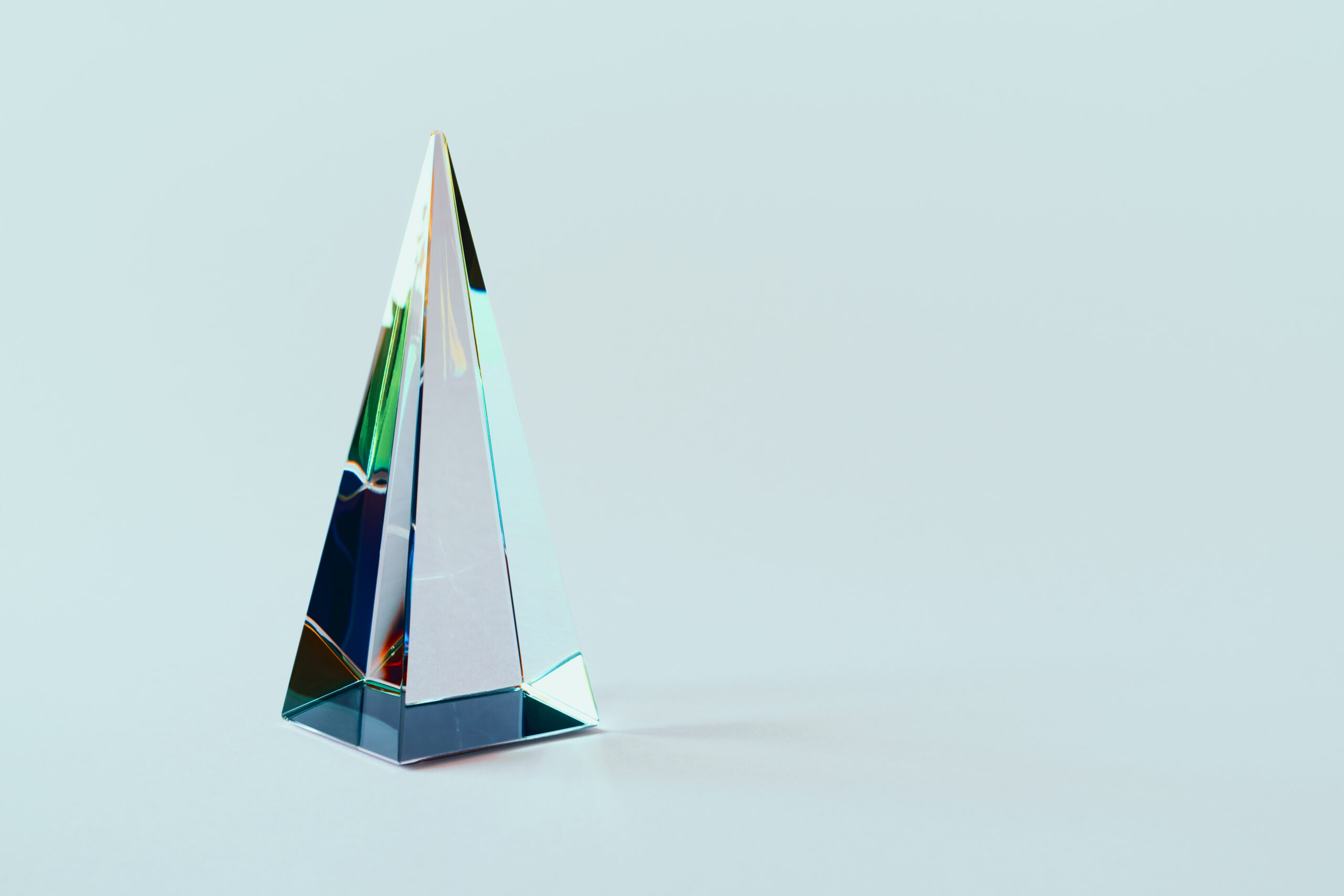
When you’re shopping for premium recognition awards, the material question comes up fast. Crystal, acrylic, and glass all look impressive on a display table or a shelf, but they’re genuinely different products with different price points, different engraving properties, different aesthetics, and different audiences. Choosing the wrong one for your event isn’t a disaster, but choosing the right one makes the award land the way you intended. This guide breaks down each material honestly what it is, what it does well, where it falls short, and which situations call for it.
Crystal Awards
What Crystal Actually Is
In the awards industry, “crystal” typically refers to optical-grade lead-free crystal a highly refined, dense glass compound engineered specifically for clarity and light refraction. True optical crystal has a weight and a depth to it that standard glass doesn’t replicate. When you hold a quality crystal award, the density is immediately noticeable. When light hits it, the facets catch and scatter it in a way that creates the characteristic brilliance crystal is known for.
Laser engraving on crystal works differently than surface engraving on other materials. The laser fires subsurface, creating the engraved text or logo as a three-dimensional frosted mark inside the material. From outside the crystal, the engraving appears to float within the piece, catching light at different angles. It’s a genuinely impressive effect especially on deeper, heavier pieces where the subsurface depth is more pronounced.
What Crystal Awards Do Best
Crystal is the right material when the award needs to make an unmistakable statement. The weight, the clarity, the light play all of it communicates that this is a significant, premium recognition piece. Top-performer awards, executive recognition, distinguished alumni, lifetime achievement tributes, keynote speaker gifts: these are the contexts where crystal earns its price point. When someone receives a crystal award, they understand without being told that it represents something important.
Crystal also ages exceptionally well. A quality crystal piece looks as good in fifteen years as it does the day it’s presented. It doesn’t scratch easily, doesn’t fade, and doesn’t become dated the way some contemporary acrylic designs can. For organizations that want their recognition to feel permanent and enduring, crystal is the strongest choice.
Where Crystal Has Limitations
Cost is the obvious constraint. Crystal awards sit at the top of the price range, which makes them impractical for large-quantity orders or events where every attendee receives one. They’re also heavier and more fragile than acrylic shipping and handling require more care, and the pieces themselves are more susceptible to chipping if dropped. Crystal is a singular award, not a bulk recognition format.
Color options are also limited compared to acrylic. Most crystal awards work in clear, cobalt blue, or frosted finishes. Organizations that want an award color-matched to their brand palette will find crystal restrictive in ways that acrylic isn’t.
Crystal Award Examples from Viking Awards
Viking Awards carries a deep crystal catalog across a range of shapes, sizes, and price points. For top-tier competitive or corporate recognition, the Diamond Series Clear Crystal Trophy with Cobalt Blue Base is a striking piece that works for both athletic and professional settings. The Crystal Obelisk with Prism-Effect Clear Upright and Black Base has a more architectural authority suited for executive or institutional recognition. For a piece with genuine visual drama, the Freestanding Crystal Flame with Jeweled Edge and Prism-Effect Base is one of the more memorable options in the lineup. The Premium Cobalt Clear Crystal Award brings a distinctive color depth, and the Cube Series Crystal Award offers a clean geometric simplicity that works well when the engraving itself is the focal point.
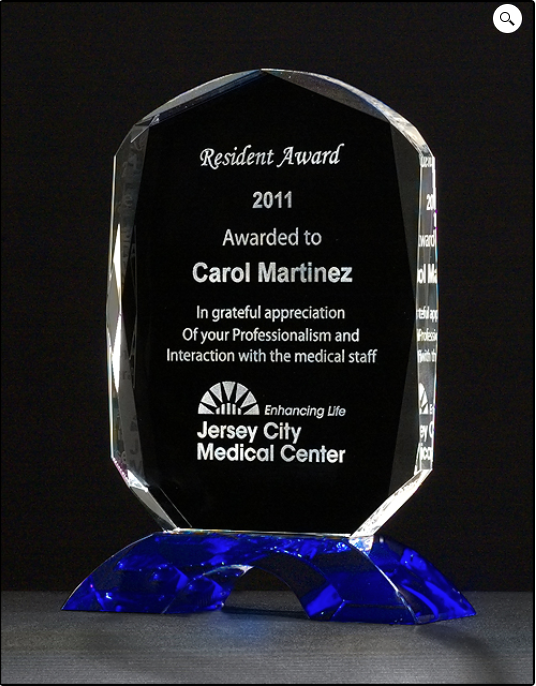
Diamond Series Clear Crystal Trophy
$132.00 – $225.00
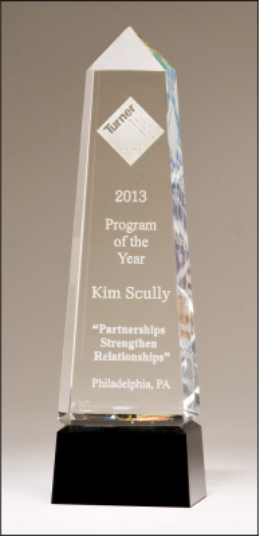
Crystal Obelisk with Prism-Effect Clear Upright and Black base.
$240.00
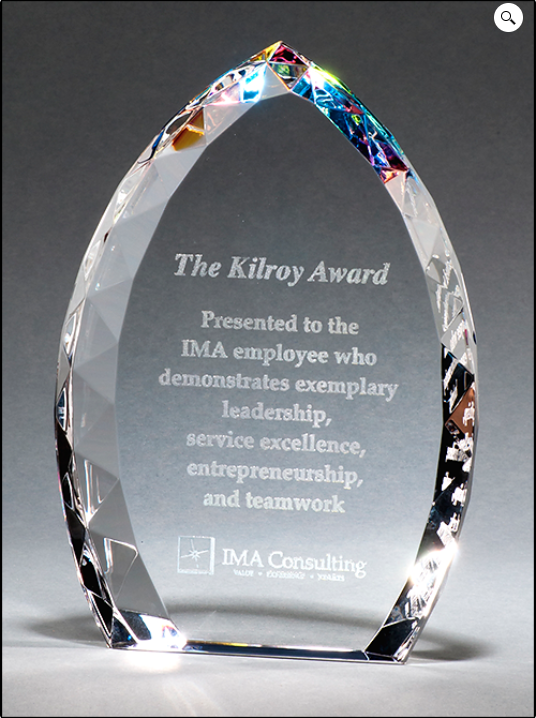
Freestanding Crystal Flame
$117.00 – $180.00
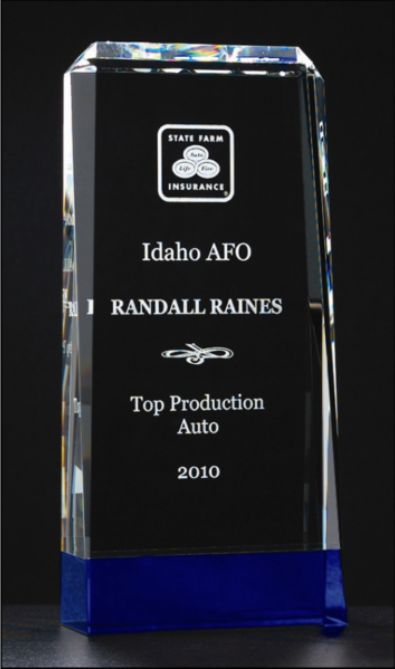
Premium Cobalt Clear Crystal Award
$123.00 – $180.00
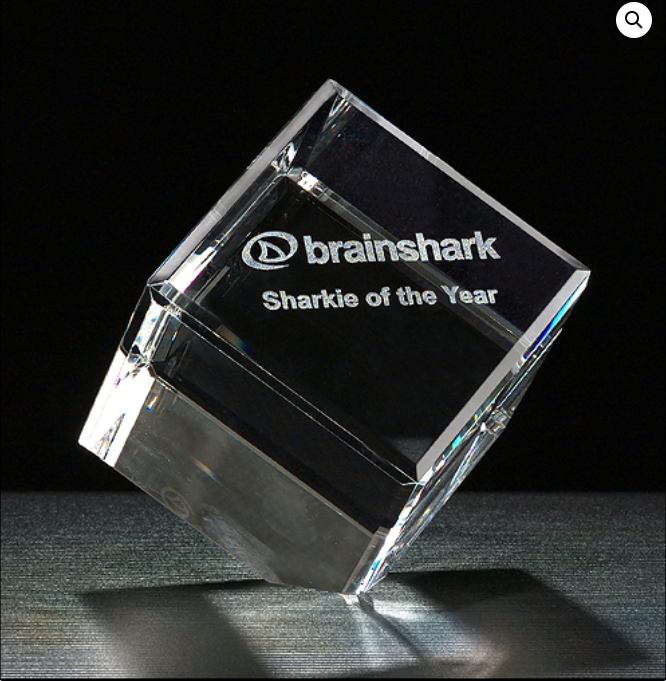
Cube Series Crystal Award
$48.00 – $129.00
Acrylic Awards
What Acrylic Is
Acrylic also sold under brand names like Plexiglas and Lucite is a thermoplastic material that can be cast, cut, and polished to a glass-like clarity. In the awards industry, acrylic pieces are laser-cut or cast into shapes and then surface-engraved or digitally printed. The result is a lightweight, versatile award that can achieve a wide range of aesthetics, from clean and corporate to colorful and contemporary.
The surface engraving on acrylic produces a frosted appearance on the clear material, which reads cleanly from most viewing angles. Digital printing on acrylic opens up full-color options logos, gradients, branded patterns that no other award material matches. For organizations that want their recognition pieces to reflect specific brand colors or include color graphics, acrylic is the only practical choice at a reasonable price point.
What Acrylic Awards Do Best
Versatility is the defining strength of acrylic. The material can be cut into virtually any shape, colored in virtually any finish, and customized with full-color printing in a way that crystal and glass simply can’t replicate. Acrylic awards work across a wider range of organizational contexts than either alternative tech companies, creative agencies, non-profits, sports programs, and corporate recognition events all use acrylic regularly because it adapts to the aesthetic language of the organization awarding it.
Cost is another real advantage. Quality acrylic awards occupy a mid-range price point that makes them practical for higher-quantity individual awards top ten performers, department recognition, tournament top finishers where crystal would be prohibitively expensive per unit. You can order a dozen acrylic awards for a recognition program and have each one feel like a thoughtful, premium piece without the budget pressure that crystal creates.
Acrylic is also significantly lighter and more durable in shipping than crystal or glass. For events where awards need to travel or where recipients will be carrying them home, acrylic’s lighter weight and resistance to chipping is a practical advantage.
Where Acrylic Has Limitations
Perceived prestige is the honest trade-off. For many recipients, especially in traditional professional or academic environments, an acrylic award doesn’t carry the same weight literally and figuratively as crystal. An executive who’s been with a company for twenty-five years receiving an acrylic milestone award rather than a crystal or glass piece may notice the difference in a way that matters. Context shapes expectation, and in formal high-stakes recognition settings, acrylic occasionally undershoots.
Acrylic can also scratch more easily than crystal over time, and some designs can look dated as aesthetic trends shift. A classic crystal obelisk from ten years ago still looks timeless. Some acrylic pieces with trend-specific color combinations or graphic elements age less gracefully.
Acrylic Award Examples from Viking Awards
Viking Awards carries one of the largest acrylic award catalogs available, with over a thousand options across shapes, colors, and series. The Apex Series Award with Blue Highlights and Blue Base and the Apex Series Award with Green Highlights and Dark Green Base are clean, versatile pieces that work across sports and corporate contexts. The Arrow Series Clear Acrylic with Blue Highlights and Blue Base has a dynamic upward-pointing form that works particularly well for achievement and performance recognition. For organizations that want a branded or full-color option, the Arch Series with Blue Mirror Upright and Convex Acrylic Front is a distinctive piece that photographs well. The Blue Flame Acrylic with Clear Pop-Out Center is a strong option for competitive events where a top individual award needs to look distinctive without the price of crystal.
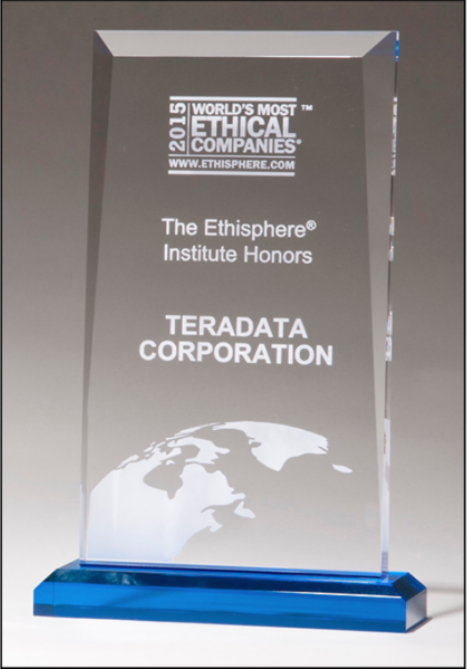
Apex Series clear acrylic award with blue highlights and blue base
$63.00 – $75.00

Apex Series Award with Green Highlights and Dark Green Base
$63.00 – $75.00
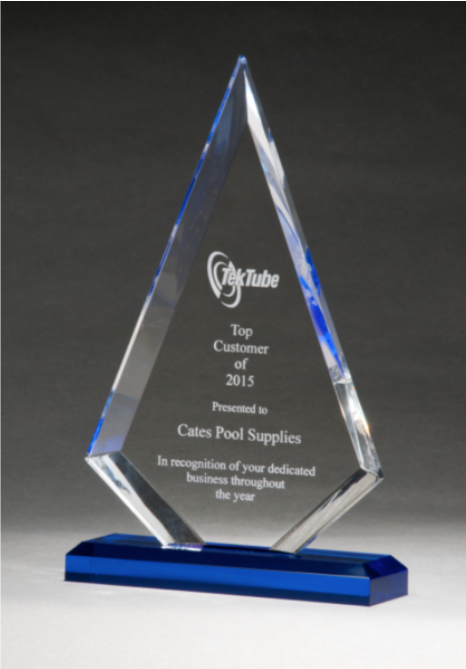
Arrow Series clear acrylic with blue highlights and blue base
$63.00 – $75.00
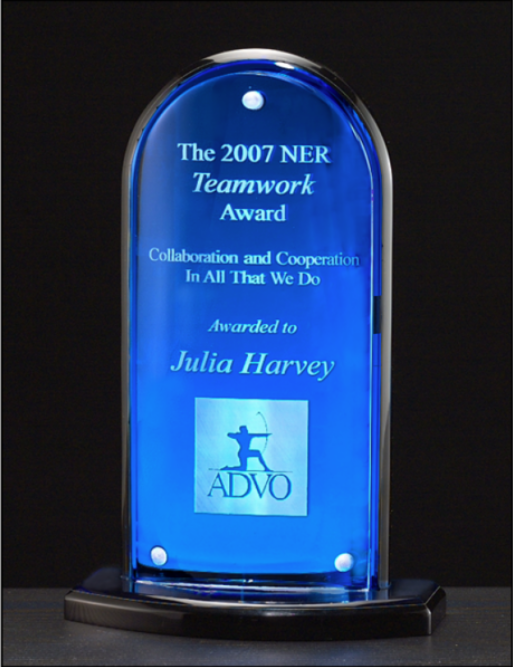
Arch Series featuring blue mirror upright and base with clear convex acrylic front
$108.00
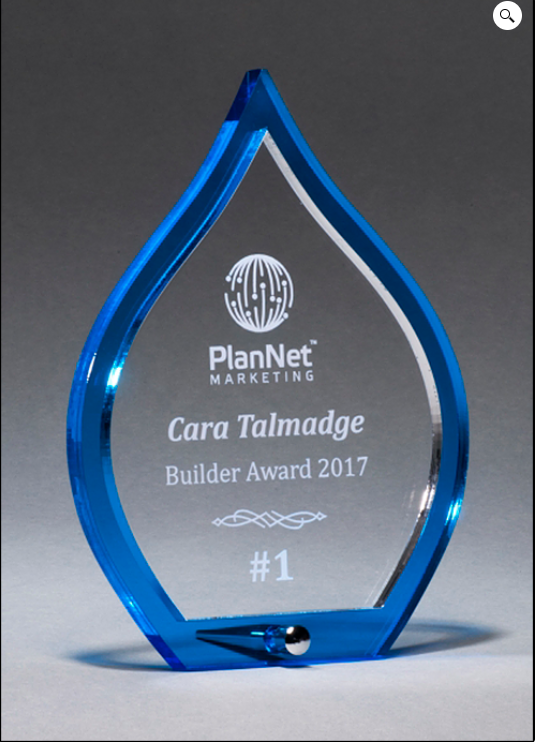
Blue Flame Acrylic with Clear Pop-Out Center and Silver Metal Post
$48.00 – $60.00
Glass Awards
What Glass Awards Are
Glass awards in the recognition industry typically refer to flat or sculptural pieces made from standard or specialty glass jade glass, clear glass, frosted glass that are surface-engraved or sandblasted. They’re distinct from both optical crystal (which is denser, heavier, and more refractive) and acrylic (which is a plastic). Glass occupies a middle ground: more substantial and more formal-feeling than acrylic, more accessible in price than crystal, and capable of sculptural forms sport shapes, architectural pieces, art glass that crystal doesn’t typically produce.
Jade glass is one of the most common glass award materials and is immediately recognizable by its characteristic green-tinted edge. It has a professional, classic look that’s been a staple of corporate and academic recognition for decades. Clear glass awards have a cleaner, more contemporary appearance. Art glass pieces handcrafted with color, texture, and unique forms represent the highest end of the glass category and blur the line between award and decorative object.
What Glass Awards Do Best
Glass awards are strong in contexts where you want a premium feel without the full cost of optical crystal. They work particularly well for mid-tier professional recognition, sports-specific sculptural pieces, and events where the award needs to look formal and intentional without reaching into the upper price range. A jade glass star award presented to a department manager or a clear glass flame given to a top regional performer lands well without requiring a crystal budget.
Sculptural glass is also where this category genuinely outperforms the alternatives. A glass soccer ball, a glass football on a marble base, or a shaped art glass piece with color and texture these forms don’t exist in crystal or acrylic. For events where a sport-specific shaped award is appropriate, glass is almost always the best material for the job.
Art glass specifically serves a recognition tier that nothing else quite matches. Handcrafted art glass pieces are one-of-a-kind objects no two are identical and they communicate that level of singular attention. For the most significant individual recognition an organization gives, art glass can be a more distinctive choice than even high-end crystal.
Where Glass Has Limitations
Standard glass is more fragile than both crystal and acrylic. It chips and cracks more easily, which matters for shipping, handling, and long-term display. For events where awards are being transported or distributed in bulk, the fragility of glass requires more careful packaging than acrylic would.
Engraving on standard glass also doesn’t produce the same visual depth as subsurface laser engraving in crystal. Surface engraving on glass produces a frosted mark similar to acrylic engraving it looks clean and professional, but it doesn’t have the embedded three-dimensional quality of crystal engraving. For awards where the engraving itself is a primary design element, crystal has a clear advantage.
Glass Award Examples from Viking Awards
Viking Awards’ glass catalog covers a strong range from mid-range professional pieces to distinctive art glass. The Diamond Series Glass Award is a clean, versatile piece in both clear and jade versions the Diamond Series Thick Jade Glass Award in particular has the classic jade edge look that reads as immediately professional in office and academic settings. The Peak Series Clear Glass Award with Brushed Silver Posts and Black Glass Base is a more contemporary option with strong presence for corporate or athletic recognition. For events where color and form matter, the Tidal Series in blue, red, and black brings color without sacrificing the professional weight of glass. And the 5 3/4″ Jade Glass Star Award is a solid mid-range recognition piece that works for academic, corporate, and sports contexts at an accessible price point.
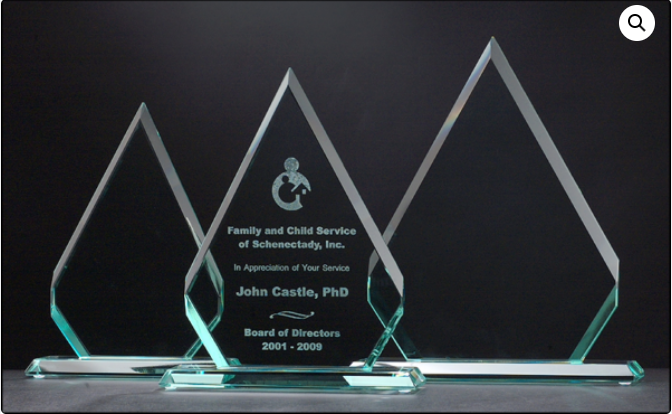
Diamond Series Glass Award
$63.00 – $78.00
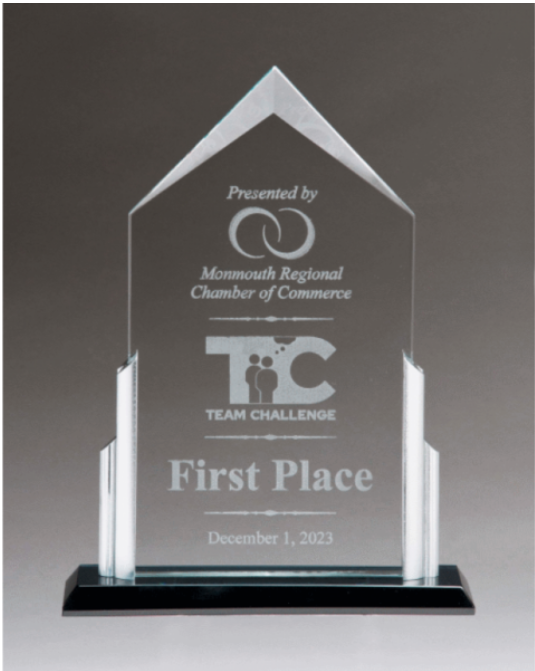
Peak Series Clear Glass Award, Brushed Silver Posts and Black Glass Base
$87.00 – $99.00

Tidal Series Clear Glass with Blue Background
$54.00 – $66.00
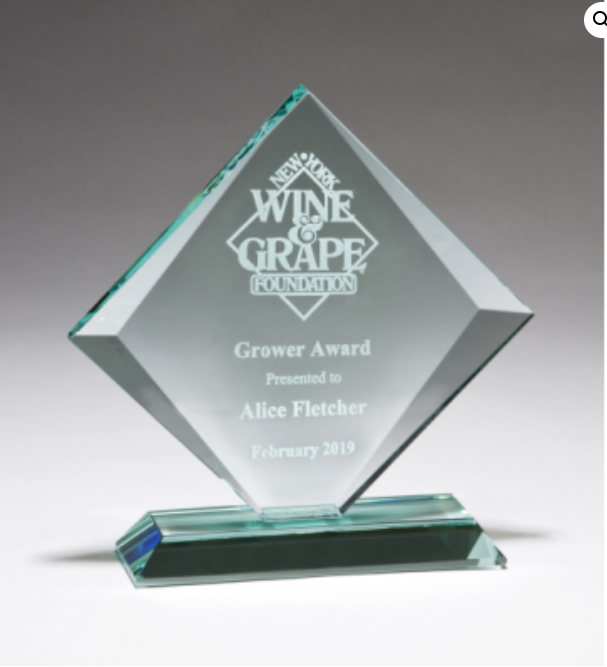
Diamond Series Thick Jade Glass Award
$51.00 – $60.00

Tidal Series Clear Glass with Black Background
$54.00 – $66.00
Crystal vs Acrylic vs Glass: How They Actually Compare
Weight and Physical Presence
Crystal is the heaviest and densest of the three, followed by glass, then acrylic. When someone picks up a quality crystal award, the weight alone communicates premium. Glass has a satisfying solidity that acrylic can’t quite match. Acrylic is noticeably lighter, which is either an advantage or a limitation depending on the context lighter for shipping and transport, but lacking the heft that some recipients associate with significance.
Engraving Quality
Crystal wins here subsurface laser engraving embedded inside the material is a unique capability that produces results no other award material can replicate. Glass and acrylic both use surface engraving or sandblasting, which produces clean frosted text but without the depth and dimensionality of crystal engraving. For awards where the personalization itself is a focal point, crystal’s engraving is a meaningful differentiator.
Color and Customization Range
Acrylic wins decisively. It can be produced in virtually any color, digitally printed with logos and full-color graphics, and cut into shapes that glass and crystal can’t achieve. Crystal offers limited color options primarily clear, cobalt blue, and frosted. Glass offers more color variety than crystal but less than acrylic, and art glass introduces unique color combinations that are one-of-a-kind rather than standardized.
Price Point
Acrylic is the most cost-effective of the three by a significant margin, making it the practical choice for higher-quantity individual awards. Glass sits in the middle more affordable than crystal, more premium-feeling than most acrylic. Crystal is the most expensive per unit, which positions it as a singular or small-quantity premium award rather than a bulk recognition format.
Durability and Fragility
Acrylic is the most durable for shipping and handling it resists chipping and cracking far better than either glass or crystal. Glass is more fragile than acrylic and requires more careful packaging. Crystal, while dense, is also susceptible to chipping at edges and corners if dropped. For events involving bulk distribution or significant transport, acrylic’s practical durability advantage is worth factoring in.
Perceived Prestige
Crystal leads in most formal and traditional recognition environments. Glass is seen as genuinely premium, particularly in corporate and academic settings. Acrylic is perceived as high quality in the right contexts especially in modern, design-forward organizations but in traditional professional and formal settings, it rarely carries the same weight as crystal or glass. The audience and the organizational culture matter here as much as the material itself.
How to Choose the Right Material for Your Event
Choose Crystal When
The award is going to one or a small number of recipients. The event is formal and the recognition is top-tier executive of the year, championship MVP, lifetime achievement, distinguished alumni. The recipient is in a traditional professional or academic environment where prestige and permanence matter. The budget supports a premium per-unit cost. You want engraving that looks like nothing else on the market.
Choose Acrylic When
You’re ordering for multiple recipients in the same recognition tier and need consistent quality across a larger quantity. The organization has strong brand colors or a contemporary aesthetic and wants the award to reflect that. The event has a modern tone tech, creative, non-profit where the classic crystal look isn’t the right register. Shipping or transport creates practical constraints around weight and fragility. Budget is a real consideration without wanting to sacrifice quality entirely.
Choose Glass When
You want something more substantial and formal than acrylic but don’t need the full investment of optical crystal. The award is sport-specific and a shaped glass piece a soccer ball, a football, a star serves the occasion better than a flat engraved piece would. The event calls for a mid-tier premium award where glass quality is evident but crystal isn’t required. You’re considering art glass for a singular featured award where one-of-a-kind craftsmanship communicates the significance of the recognition.
Shop Crystal, Acrylic, and Glass Awards at Viking Awards
Viking Awards carries an extensive catalog across all three material categories hundreds of crystal award options, over a thousand acrylic designs, and a full glass and art glass collection all available with in-house custom engraving. Whether you’re selecting a featured crystal piece for a top individual honor, an acrylic series for a recognition program, or a sculptural glass award for a sports banquet, the team at Viking Awards can help match the right material and format to your event.
Browse the full catalog at viking-awards.com, or call (630) 833-1733 to talk through your options directly.