
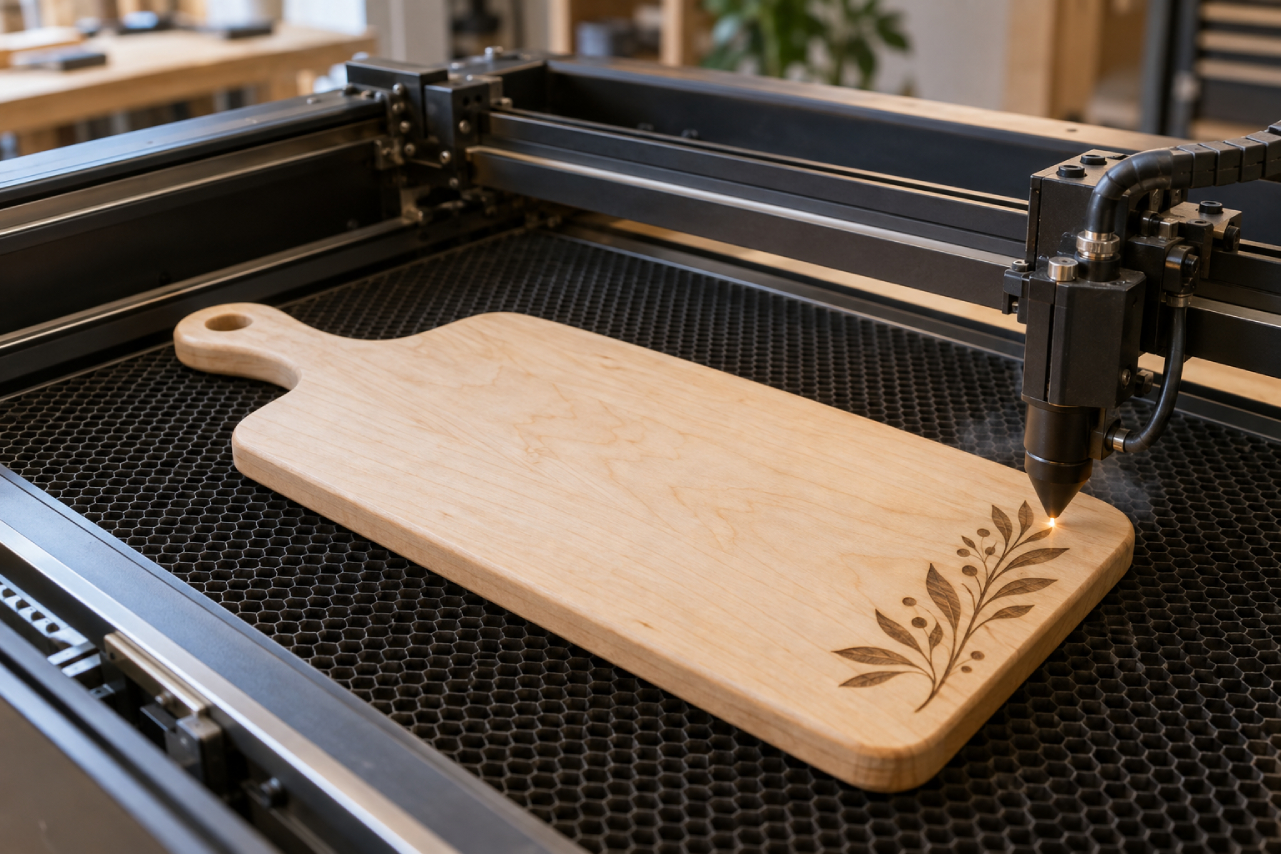
Wood takes engraving better than almost any other material. The laser leaves a warm, dark mark against the grain, the result looks handmade even though it is precise, and the finished piece feels substantial in a way acrylic and metal do not. That combination is why wood engraving has become the default for recognition plaques, retirement gifts, housewarming presents, and any occasion where the object is meant to last. This guide covers which woods engrave well, what products are worth ordering, how the process works, and what to consider before you place an order.
Which woods engrave best
Not all wood responds the same way under a laser. The best results come from species with consistent density and a color that contrasts with the engraved mark.
Walnut is the standard for plaques and awards. The dark brown grain engraves to a slightly darker mark, which is subtle, so walnut is usually paired with an engraved metal plate for the text. The walnut plaques in the Viking catalog work this way.
Cherry engraves to a rich dark mark against a reddish-brown surface and darkens naturally over time. It is a common choice for perpetual plaques and slide-in frame plaques like the cherry finish slide-in frame plaque.
Maple is light and engraves to a strong dark contrast, which makes it the best species for detailed logos, photographs, and long text. Cutting boards and serving boards are almost always maple for this reason. The maple butcher block cutting board is a good example.
Bamboo is technically a grass but engraves like a light hardwood, with clean contrast and a modern look. The bamboo plaque is a popular alternative to walnut for organizations that want a lighter aesthetic.
Alder, birch, and pine also engrave well and appear in signs and rustic gifts, though they are less common in awards.
What gets engraved on wood
Plaques
The largest category. A wood plaque with engraved text or an engraved plate is the standard format for service awards, retirement recognition, dedication plaques, and memorials. Direct engraving on the wood works for logos and short headlines; longer text usually goes on a plate because it stays crisper. See the custom plaques guide for formats and the plaque engraving guide for wording and layout.
Cutting and charcuterie boards
The most popular wood gift category. A name, a family crest, a date, or a short line engraves on the face or the handle. Maple, walnut, and the black walnut charcuterie board all work. Engrave on the side that will be displayed, not the cutting surface, if the board will be used.
Signs
Business signs, office door signs, directional signs, and home signs all engrave on wood. Larger signs are usually engraved and then color-filled so the text reads from a distance.
Boxes, frames, and keepsakes
Jewelry boxes, memory boxes, picture frames, wine boxes, and pen boxes engrave on the lid or face. These are common for weddings, anniversaries, and retirements.
Trophy bases and award components
Many trophies and crystal awards sit on a wood base, and that base is where the engraving goes. The crystal awards catalog includes a number of pieces on walnut or rosewood bases.
How wood engraving works
A CO2 laser vaporizes a thin layer of the surface, leaving a recessed mark that is darker than the surrounding wood because of the heat. The depth is shallow, typically under a millimeter, so the mark is visual rather than tactile. On darker woods the contrast can be subtle, which is why walnut usually gets a plate.
For deeper engraving with a tactile edge, rotary engraving cuts into the wood with a spinning bit and is used for signs and applications where the recess will be color-filled. The types of engraving comparison covers when each is the better choice.
Finished wood engraves fine. A clear coat or oil finish does not interfere with the laser and protects the surface. Painted wood engraves through the paint to the wood underneath, which creates a two-tone effect.
Artwork and text
Wood handles fine detail well on light species and less well on dark ones. Logos should be supplied as vector files. Photographs can be engraved on maple and bamboo with a halftone effect that reads well from a normal viewing distance but looks dotted up close. Long text engraves cleanly but should be sized generously, because the slight burn on the edges of each letter can fill in very small fonts.
For plaques and awards, our award engraving wording guide has phrasing and layout examples that apply to wood.
Turnaround and cost
Stock wood items with straightforward engraving turn around in one to three business days at a shop that engraves in-house, and same-day is frequently possible for a single piece. See the same-day and rush engraving guide. Cost depends on the size of the engraved area and the complexity of the artwork more than on the wood itself. A name and date on a cutting board is inexpensive; a full logo and multiple lines of text on a large sign is more. The engraving cost guide covers typical ranges.
Wood engraving for occasions
Weddings and anniversaries are the largest personal category. A cutting board with the couple’s names and the date, a wine box with a message, or a keepsake box for cards. Maple and walnut both suit this; maple shows the engraving more clearly, walnut feels richer.
Retirements and service milestones take a walnut plaque with an engraved plate, sometimes with the organization’s logo engraved directly on the wood above the plate. The retirement plaque wording guide covers what to write.
Housewarmings and closings take a family-name sign, a cutting board, or a serving board. Real estate agents order these in batches with a consistent layout and a variable name.
Memorials take a walnut or cherry plaque for indoor placement, or a photo frame with an engraved line. Outdoor memorials should not be wood; see the outdoor memorial plaques guide for materials that hold up.
Corporate gifts take engraved boxes, boards, pen sets, and desk pieces with a logo and a recipient name. Bamboo has become a popular choice for its lighter aesthetic and sustainability association.
Direct engraving vs an engraved plate
On light woods like maple and bamboo, direct engraving produces a clear, dark mark and is the right choice for names, logos, and short text. On dark woods like walnut, direct engraving is subtle and works best for a logo or a headline, with the body text on a brass or black plate. The plaque engraving guide covers plate options.
Direct engraving can also be color-filled, where paint is applied into the recessed mark. This produces high contrast on any wood and is common on signs.
Photo engraving on wood
Photographs engrave on maple and bamboo with a halftone effect. Portraits, pet photographs, and landscapes all work if the image has good contrast and a clear subject. The engraving reads well from a few feet away and looks dotted up close, which is the nature of the process. Supply the highest-resolution image available. Dark, busy, or low-contrast photographs engrave poorly and the shop should tell you before running them.
Care and finishing
Engraved wood is finished the same way as unengraved wood. Cutting boards get food-safe mineral oil or board cream; the engraving takes the oil and darkens slightly, which usually improves contrast. Plaques and boxes get a clear coat or leave the factory finish. Signs for outdoor use need a marine-grade finish and will still weather; for permanent outdoor text, use metal.
Do not engrave the cutting surface of a board that will be used for food preparation. Engrave the reverse side or the handle, and use the engraved side for display.
Frequently asked questions
Q. Can finished or stained wood be engraved?
Yes. The laser goes through the finish to the wood. Painted wood engraves through the paint for a two-tone effect.
Q. Can I bring my own wood item?
Yes, if it is solid wood or a wood veneer thick enough to engrave. Particleboard and MDF engrave poorly and produce an inconsistent mark.
Q. How deep is the engraving?
Shallow, typically well under a millimeter. It is visual rather than tactile. For a deeper cut, rotary engraving is available on many wood items.
Q. Does the engraving fade?
No. It is a change to the wood itself. The wood around it may darken or lighten with age, which can change the contrast slightly.
Q. Can a logo be engraved on a wooden trophy base?
Yes, and it is a common way to add branding to a crystal or acrylic award.
Custom wood engraving at Viking Awards
Viking Awards engraves wood in-house at its Westchester, Illinois shop and has since 1973. The catalog covers walnut, cherry, maple, and bamboo plaques, cutting boards, boxes, frames, and bases, and the team can engrave wood items you bring in. Call (630) 833-1733 with what you have in mind, or browse the engraving gallery to see finished wood work. For an overview of everything the shop engraves, see the custom engraving services guide.