
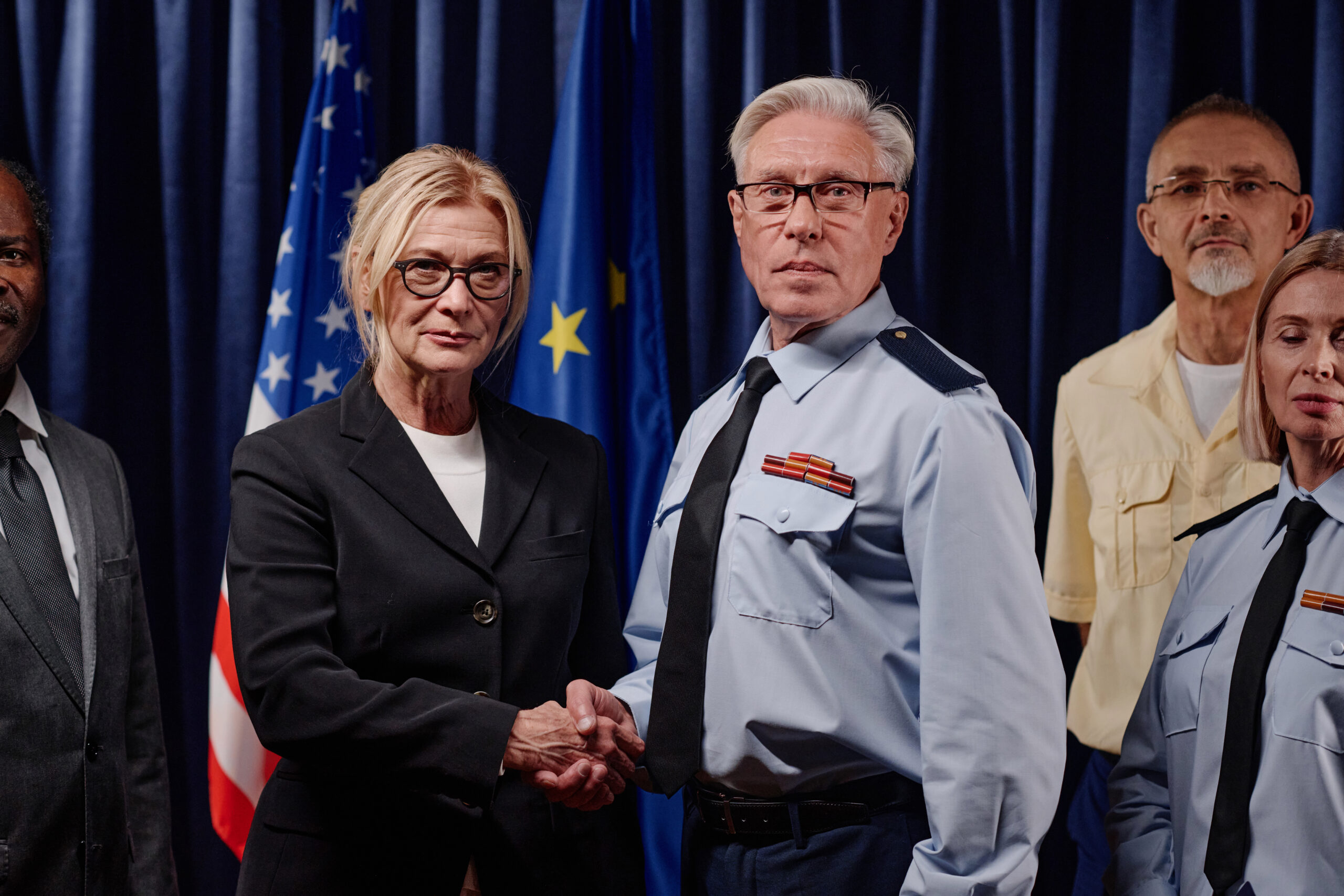
Recognition inside a police department is a retention tool disguised as a ceremony. Officers do not stay for the awards, but they notice acutely when a department cannot be bothered to do them properly. A Medal of Valor presented in a cheap frame, a retirement plaque with a misspelled rank, or a fifteen year pin handed over at roll call in an envelope all send a message that nobody intended to send.
Departments buying recognition awards face a specific set of problems: procurement rules, protocol conventions that outsiders get wrong, and ceremonies scheduled around shifts and command availability. This guide covers what matters in a law enforcement awards order, what formats hold up, and which suppliers handle department work well.
What to Consider Before Placing a Department Order
Understand which side of the order you are on. Law enforcement recognition splits cleanly into two categories. Worn items, meaning badges, commendation bars, service stripes, and uniform medals, come from badge manufacturers who hold your department’s die and specifications. Presented items, meaning plaques, banquet awards, perpetual boards, and desk pieces, come from awards and engraving shops. Confusing the two wastes weeks, because a badge house is not set up to turn a walnut plaque around in five days and an awards shop does not hold your badge die.
Get the protocol details right. Rank abbreviations, badge numbers, dates of appointment, unit designations, and the exact wording of a commendation are not places to improvise. Provide the vendor with copy exactly as it should appear, in writing, and require a proof back. Most engraving errors in police work are not the engraver’s fault; they come from a hurried email with an ambiguous abbreviation.
Plan for the pieces that need to last. A department wall of honor, an officer of the year board, or a chiefs’ history board is a permanent installation that outlives the people who order it. Buy that as a perpetual format from the beginning rather than assembling individual plaques and hoping they match in year eight.
Then be realistic about timing. Promotion boards, awards committees, and command review cycles all finish late. Choose a vendor with in house engraving so the physical piece can be built while the recipient list finalizes, and copy can be added at the end.
Formats That Suit Law Enforcement Recognition
Commendation and Valor Plaques
For individual commendations, a solid hardwood plaque with an engraved plate is the durable standard. Viking’s 9 by 12 inch Solid American Walnut Plaque with Eagle Relief Casting suits valor and lifesaving recognition, and the 8 by 10 1/2 inch walnut plaque with eagle and American flag relief carries the patriotic framing that suits department ceremonies. For a chief or command staff retirement, the 15 by 11 inch walnut plaque with sculptured relief eagle casting has the scale the occasion calls for.
Shield Plaques for Badge Geometry
Shield shaped plaques echo the badge and read immediately as law enforcement. The Sheffield Series walnut shield plaque with jewelers black plate works for individual commendations, with larger walnut finish shield plaques available when a unit or division award needs more presence.
Perpetual Boards and Walls of Honor
Departments that award annually should own a board rather than a stack of plaques. Viking’s 36 Plate Genuine Walnut Perpetual Plaque covers decades of an officer of the year program, and the 102 plate perpetual board is built for a full departmental history. A 40 plate perpetual plaque with black brass plates sits in between and mounts well in a lobby.
Formal Banquet and Retirement Pieces
For high gloss formal presentations, the 9 by 12 inch Airflyte Rosewood High Gloss Plaque and the Silver Alloy Plaque both photograph well and feel substantial in hand. Crystal suits civilian awards, citizen commendations, and community partner recognition, and Viking’s crystal awards range includes pieces like the 7 inch Crystal Carved Eagle on Black Base that work for those audiences. Academy graduations and training completions are usually best served by medals at class quantities.
Best Providers for Police and Law Enforcement Recognition Awards
1. Viking Awards

Viking Awards has been producing engraved recognition awards since 1973 and works the presented awards side of law enforcement recognition, which is where most department deadlines get tight. Engraving happens in house at their Westchester, Illinois facility, so commendation copy, ranks, and dates can be finalized late without pushing a ceremony. Their catalog spans eagle and patriotic walnut plaques, shield plaques, high gloss and silver alloy formal pieces, crystal for civilian and community awards, perpetual boards for walls of honor, and medals for academy classes. Departments handling a valor ceremony, a retirement, and an annual banquet in the same year can run all of it through one vendor and one point of contact. Website: viking-awards.com. Phone: (630) 833-1733.
2. V.H. Blackinton & Co.
Founded in 1852 in Attleboro Falls, Massachusetts, Blackinton describes itself as the largest US manufacturer of police, fire, security, military, and government badges and uniform insignia. Their recognition line covers hand crafted medals with custom finishes, lettering, seals, enamel, and ribbon, plus commendation bars and slide bar holders, and they offer engraveable custom bars with no die fees. For departments standardizing a commendation bar system, they are a natural first call. Website: blackinton.com. Phone: 800-699-4436.
3. Smith & Warren
Smith & Warren has been manufacturing in White Plains, New York since 1925, now out of a 27,000 square foot domestic facility. Their recognition program includes more than 600 customizable service award bars plus a full custom medal line, and they publish quantity thresholds openly, including badge quantity discounts starting at fifteen pieces. Useful for departments building a structured years of service program. Website: smithwarren.com. Phone: 914-948-4619.
4. Entenmann-Rovin Co.
Entenmann-Rovin has been producing badges since 1888 out of Commerce, California, and developed its proprietary Carltone and Platiloy alloys in house in 1939. They make badges, medals and award bars, challenge coins, and ceremonial city keys, and they publish a straightforward 30 to 35 business day turnaround, which is honest planning information rather than a vague promise. Website: entenmann-rovin.com. Phone: (323) 278-1999.
5. Sun Badge Company
Sun Badge has been operating since 1960 with manufacturing in Ontario, California under the line “Honoring Our Heroes Since 1960.” Alongside badges, they carry a medals and ancillary category built specifically for recognition, plus commemorative and awareness badges for department campaigns and milestone years. Website: sunbadgeco.com. Phone: (909) 930-1444.
6. Medalcraft Mint
Medalcraft Mint has operated in Green Bay, Wisconsin since 1948 and states it builds every product domestically rather than outsourcing overseas. They die strike rather than cast, and serve law enforcement with challenge coins, recognition awards, badges, ceremonial maces, shadow boxes, and plaques. Worth a call for departments commissioning a struck medal or a commemorative coin for an anniversary year. Website: medalcraft.com. Phone: 800-558-6348.
The companies listed above reflect editorial opinion only and are not ranked in any particular order of preference or quality beyond the first position. This list is independent and should not be taken as an official endorsement or paid ranking. Contact details are accurate at the time of publication but are subject to change.
Common Errors in Department Awards Orders
Sending engraving copy by casual email is the leading cause of ruined plaques. Ranks abbreviated inconsistently, badge numbers transposed, and unit names spelled two ways in the same list all end up cast in brass. Send a single formatted document, and require a proof.
Ordering a valor award at the same lead time as a certificate is the second error. Custom medals and struck pieces have production cycles measured in weeks, sometimes more than a month. If a commendation is going to a struck medal, that decision needs to be made early in the review process, not after it.
Buying the ceremony piece and skipping the permanent record is the third. Departments hold ceremonies every year and then cannot produce a list of past recipients five years later. A perpetual board fixes that permanently and costs less over a decade than the individual plaques it replaces.
The last one is procurement driven. Some departments split awards across whichever vendor is on contract for a given category, and end up with a wall where nothing matches. If your recognition is going on a shared wall, buy it from one source in a consistent format.
Making the Decision
Sort your order first. Anything worn on a uniform goes to a badge manufacturer with your specifications on file. Anything presented, hung, or displayed goes to an awards shop with in house engraving, because that is where late copy and short deadlines are survivable. Departments that keep those two relationships open stop scrambling.
Then evaluate on process, not price. Ask whether you get a layout proof, how corrections are handled, and what the real turnaround is once copy is approved. A vendor who answers those clearly is worth a modest premium over one who does not.
Officers earn recognition in circumstances most people never face. The ceremony should reflect that, and so should the object they carry out of the room. Order early, proof the copy, build the permanent board, and work with a shop that has handled department deadlines before. Viking Awards has been doing that work since 1973.
Phone: (630) 833-1733
Website: viking-awards.com