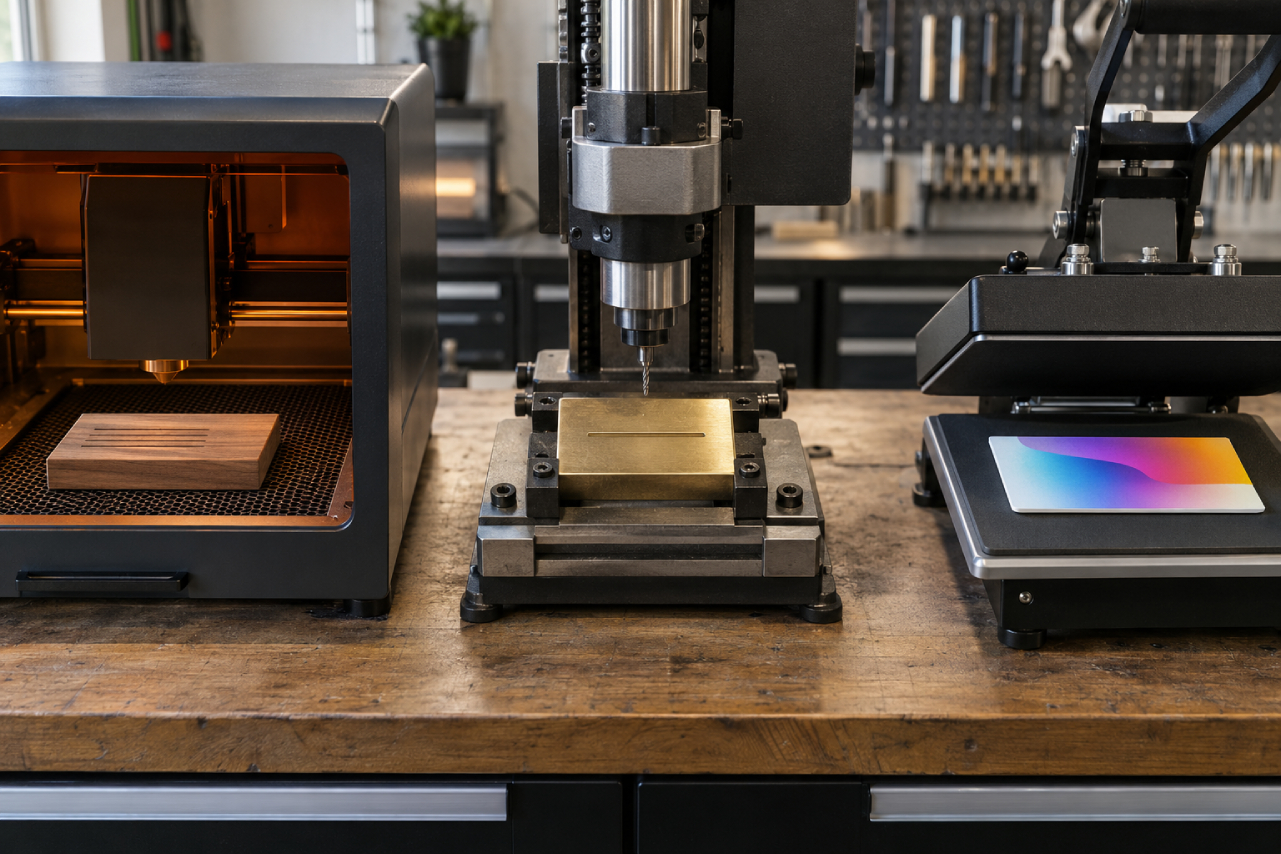
Ask three engraving shops to put a logo on a plaque and you may get three different processes. Laser, rotary, and sublimation all produce a mark on a surface, and all of them are called engraving in everyday use, but they work differently, suit different materials, and look different up close. Knowing which is which helps you ask for the right one and judge whether a shop can actually do the job. This guide explains each method, what it is for, and how to choose.
Laser engraving
A laser focuses a beam of light on the surface, and the energy either vaporizes a thin layer or changes the surface so it darkens or frosts. The result is a precise, shallow mark that follows a digital file exactly.
Laser is the most versatile method and the default for most modern engraving. It handles wood, acrylic, glass, leather, coated metals, and, with a fiber laser, bare metals like stainless steel and titanium. It reproduces fine text, small logos, and detailed line art cleanly. It is fast, repeatable, and what most award and gift engraving now uses.
What it does not do is produce depth. The mark is visual, not tactile. On brass and gold it makes a crisp shallow line rather than a deep cut, so it does not catch light the way a rotary cut does. The laser engraving services guide goes into materials and applications in detail.
Rotary engraving
Rotary engraving uses a spinning cutter, or a diamond-tipped drag stylus, to physically cut into the surface. It is the traditional method and the one people picture when they think of engraved brass or a hand-engraved ring.
Rotary produces depth. A cut plate has a recess you can feel, and on brass, aluminum, gold, and silver the cut edge catches light and reads clearly from an angle. It is the right choice for metal nameplates, brass plaque plates that will be color-filled, signs that need a tactile edge, and jewelry in soft metals. It is also the method for ADA-compliant signage where raised or recessed characters are required.
Rotary is slower than laser, less suited to very fine detail and tiny fonts, and cannot engrave glass or crystal. The jewelry engraving guide covers where rotary is the better choice for rings and watches.
Sublimation
Sublimation is not engraving in the strict sense. It is a printing process where dye is transferred into a specially coated surface under heat, becoming part of the coating rather than sitting on top of it. The result is full color, photographic quality, and durable.
Sublimation is the method for anything that needs color: full-color logos, photographs, and multi-color designs on plaques, mugs, tumblers, name badges, and metal panels. It only works on sublimation-ready coated blanks, so the item must be manufactured for it. It does not produce a recessed or raised mark; the surface stays smooth.
If you have a full-color logo and want it reproduced exactly, sublimation is the process. If you want a single-color engraved look, laser or rotary.
Comparing the three
Precision and fine detail: laser first, sublimation close behind for printed detail, rotary last.
Depth and tactile edge: rotary only.
Color: sublimation only, or laser with color fill for single colors.
Materials: laser is broadest; rotary is metals, wood, and plastic; sublimation is coated blanks only.
Glass and crystal: laser only.
Bare stainless and titanium: fiber laser or rotary.
Gold and silver jewelry: rotary preferred, laser acceptable.
Speed and cost at volume: laser and sublimation are faster; rotary is slower.
Permanence: all three are permanent; rotary is the most resistant to surface wear.
When to choose which
Awards and plaques with text and a logo: laser on the plate or the surface. See the plaque engraving guide.
Crystal and glass: laser, subsurface or surface. See the crystal engraving guide.
Brass plates that will be color-filled, or plates where depth matters: rotary.
Full-color logos on plaques, badges, or tumblers: sublimation.
Rings, bracelets, and precious metal: rotary.
Wood plaques and boards: laser. See the custom wood engraving guide.
Signs with raised or tactile lettering: rotary.
Other methods you may encounter
Sandblasting, or abrasive etching, uses pressurized grit through a stencil to frost glass, crystal, and stone. It produces a deeper frost than laser and is used for larger areas and for pieces where a tactile mark is wanted. It is slower and less precise for fine detail.
Chemical etching uses acid to mark metal through a resist. It is an industrial process, used for nameplates and parts in volume, rarely offered at award shops.
Hand engraving uses a hand-held graver to cut metal. It is the traditional method for fine jewelry and firearms and is a craft rather than a shop service. Very few award shops offer it.
Hot stamping and foil printing press a heated die with foil onto leather, paper, or plastic. It produces a metallic or colored impression and is used for portfolios, certificates, and packaging. It is printing, not engraving.
UV printing prints full-color ink directly onto a surface and cures it with ultraviolet light. Like sublimation it is a printing process; unlike sublimation it does not require a coated blank and works on wood, acrylic, and metal. Some award shops offer it as an alternative to sublimation.
Choosing between laser and rotary on metal plates
The most common decision in an award shop is which method to use on a brass or aluminum plaque plate. Laser produces a crisp shallow mark, fast, with fine logo detail. Rotary produces a deeper cut with a light-catching edge, slower, better for color fill. For most plaques, laser. For plaques where the plate will be color-filled or where a traditional deep-cut look is wanted, rotary. Ask the shop for a sample of each on the plate material.
Choosing between laser and sublimation on plaques
If the logo is single-color, laser on a brass or black plate is cleaner and more traditional. If the logo is multi-color, or the plaque needs a photograph, sublimation on a coated plate reproduces it exactly. Many organizations use laser for the text plate and sublimation for a separate logo panel on the same plaque.
Method by common item
Plaque plate: laser or rotary. Full-color plaque: sublimation. Crystal award: laser, subsurface or surface. Acrylic award: laser. Wood plaque or board: laser. Cup trophy base plate: laser or rotary. Cup body: rotary or laser. Ring or bracelet: rotary, or fiber laser on steel. Watch caseback: fiber laser on steel, rotary on gold. Tumbler or flask: fiber laser on stainless, or sublimation on coated. Name badge: laser on plastic or anodized aluminum, sublimation on coated. Sign: rotary for tactile, laser for flat, sublimation or UV print for color. Cutting board: laser.
Frequently asked questions
Q. Which method is most durable?
All three are permanent. Rotary cuts resist surface wear best; laser and sublimation last as long as the surface they are on.
Q. Which is most expensive?
Subsurface laser on crystal is the most expensive per piece. Between laser and rotary on plates, cost is similar. Sublimation requires coated blanks, which can cost more than plain ones.
Q. Can one item use more than one method?
Yes. A laser-engraved text plate with a sublimated logo panel on the same plaque is common.
Q. Does the method affect turnaround?
Slightly. Laser is fastest per piece; rotary is slower; sublimation adds a heat-press step. For single items the difference is minutes; for bulk orders it can be a day.
Q. How do I know which method a shop used?
Ask, or look: laser marks are shallow and crisp, rotary cuts have visible depth, and sublimation is full-color with no recess.
Asking for the right method
You do not need to specify the method when you order. A good shop chooses it based on the item and the result. But knowing the methods lets you ask better questions. “Will this be laser or rotary on the brass plate?” “Can this logo be done in full color?” “Is this crystal optical grade, so it can take subsurface?” Those questions signal that you know what you are looking at and get you a more precise answer. And if a shop cannot tell you which method they would use or why, that is the answer to whether to use that shop.
Why it matters when choosing a shop
A shop with only a laser cannot do deep rotary work or full-color sublimation. A shop with only rotary cannot engrave glass or acrylic cleanly. A full-service engraving shop runs all three and picks the method based on the item and the result you want, which is the difference between “we can do that” and “we can do that well.” Viking Awards has run laser, rotary, and sublimation in-house since 1973 at its Westchester, Illinois shop. Browse the engraving gallery to see each method on finished pieces, read the custom engraving services guide for the full range, or call (630) 833-1733 and describe the item. The team will tell you which process is right and why.